Adalia and Baladi lemon in counts 72 to 156, packed in 15 kg telescopic cartons at 24,000 kg per 40ft reefer. November to April.
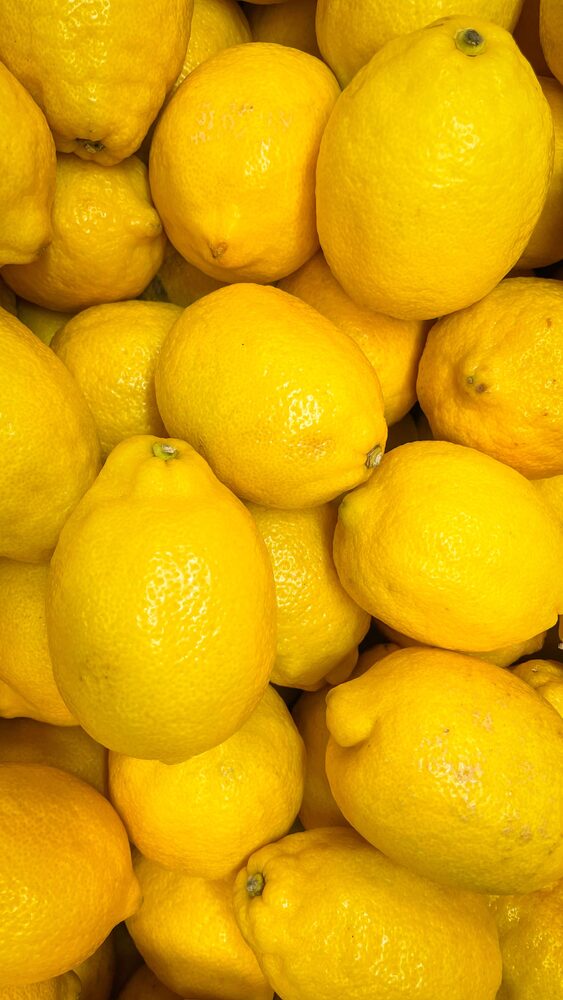
Two lemons, and the difference matters more on a long route than a short one. Adalia is the larger, thin-skinned, high-juice lemon and it is the one that travels — robust enough for the four-week transits a CIF programme into northern Europe or the Americas implies. Baladi is smaller and more aromatic, and it is excellent fruit, but it is better suited to shorter routes and markets that value the aroma.
If you are not sure which you want, tell us the destination port and the transit time. That answers it faster than a description does.
A telescopic carton is a two-piece box — a lid that slides over a base rather than flaps that fold in. It costs more and it is worth it here, because the two overlapping walls carry stacking load far better than a single-wall carton does.
Lemons are dense, they are shipped in tall stacks, and they sit in transit longer than most citrus. A carton that softens under load lets the stack lean, and a leaning stack is how fruit arrives bruised at the bottom of a pallet. The packaging is doing real work on this line rather than just carrying a brand.
Seventy-two is large fruit and one hundred and fifty-six is small — the count is how many fill the carton, so it runs opposite to size. Food service tends to want the middle of the range; juice and processing buyers usually take the smaller counts, where the price per kilo of juice is better.
Grading, classes and tolerances follow the UNECE standard FFV-14 for citrus fruit. Naming it in the contract is free and settles arguments quickly.
Packed to order. Counts, cartons and grade all move against your spec — tell us what you need.
| Varieties | Adalia · Baladi |
|---|---|
| Sizes / counts | 72 · 80 · 88 · 100 · 113 · 125 · 138 · 148 · 156 |
| Grade | Class I standard. Class II on request. |
| Packing | 15 kg telescopic carton (15 kg net). |
| Pallet configuration | 80 cartons per pallet · 20 pallets per 40ft container |
| 40ft container load | 1,600 cartons · 24,000 kg net |
| Shipping temperature | 10–13°C — lemons chill-injure below this, so they ship warmer than oranges. |
| Season | November to April. |
| Certification | BRCGS, ISO 9001:2015, GLOBALG.A.P., registered with the U.S. FDA. Halal and Kosher available. Phytosanitary, health and origin certificates with every shipment. |
| Terms & ports | FOB, CIF and C&F. Loading Damietta, Alexandria, Port Said or Ain Sokhna. |
Tell us the variety, count, volume, destination port and Incoterm — we send the spec sheet, certificates and a quote, usually within 24–48 hours.
Practical background from our side of the trade — free, no sign-up.
Fresh produce cannot be improved after harvest. Everything from the moment of picking is a slower or faster decline — and the single biggest…
The produce is rarely the hard part. What decides whether a first shipment becomes a programme is the specification, the paperwork and the payment…
Grading is not quality snobbery. It is the language two strangers use to agree, in advance, on what will be inside a container that neither of them…
See the full citrus range, or all fresh produce.